

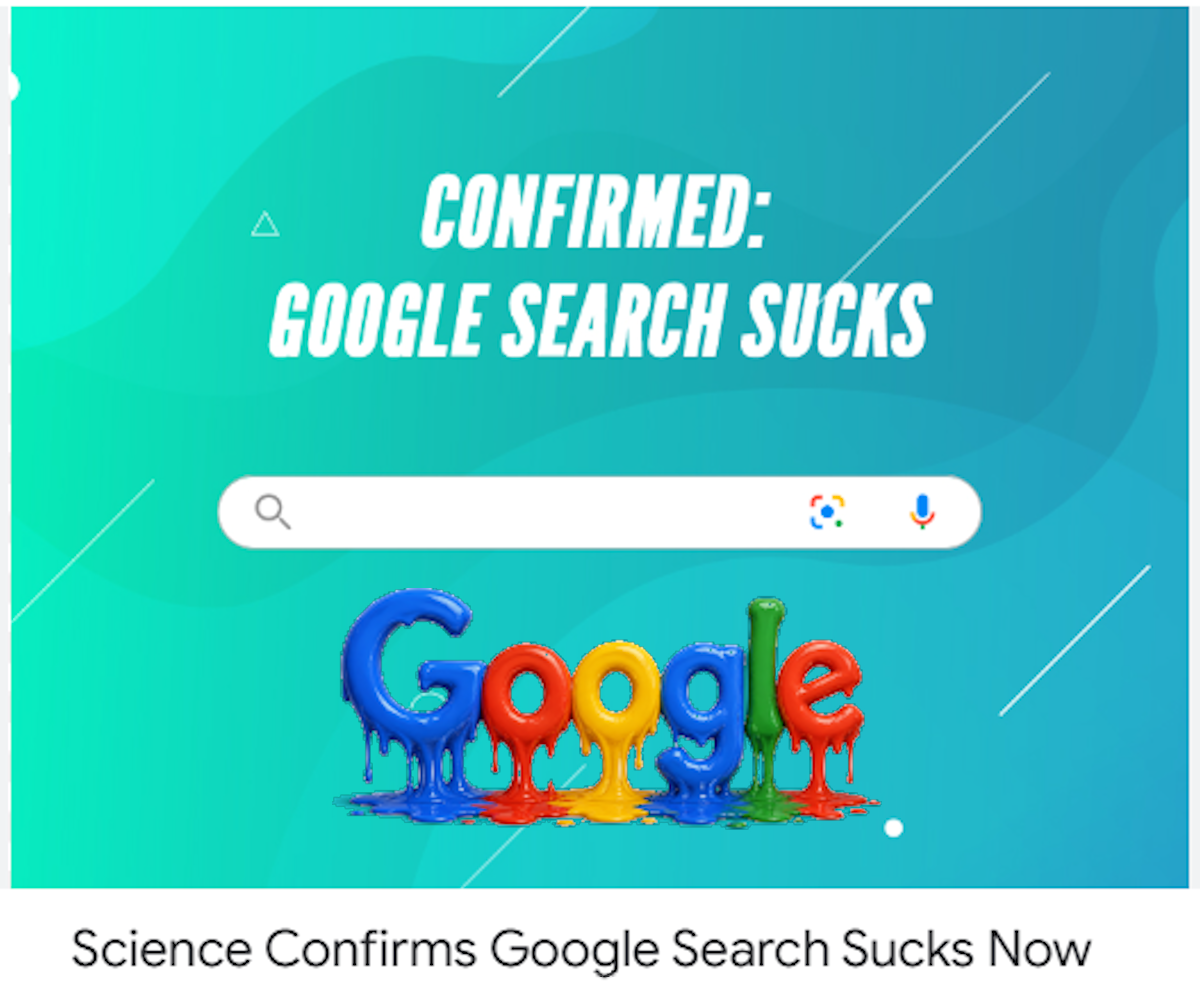
There’s a growing frustration among everyday users and professionals alike: the sense that Google Search is no longer a tool for discovery, but a marketplace where visibility is increasingly determined by who pays the most. Whether that perception is fully accurate or not, it’s powerful—and it’s reshaping how people trust the web’s most important gateway.
At the center of the criticism is a simple experience many people now recognize. You type in a company’s exact name, expecting to find its official website at the top. Instead, you’re greeted by competitors, aggregator sites, review platforms, and a stack of sponsored ads. Only after scrolling—sometimes significantly—do you reach the actual result you were looking for.
This isn’t happening by accident.
The Shift from Relevance to Revenue
Historically, Google built its reputation on relevance. Its PageRank algorithm rewarded authority, backlinks, and content quality. The implicit promise was simple: the best answer wins.
But over time, that model has been layered with aggressive monetization. Paid placements—labeled as “Sponsored”—often dominate the most valuable real estate on the page. For high-intent searches (like brand names or products), competitors can bid on each other’s keywords. That means a rival company can effectively intercept your search traffic by outbidding you.
Same goes with YouTube, owned by Google. Ads now pop up mid video and at the most popular and most viewed position in the video. About to get the big reveal or central plot of a movie, and you get interrupted with erectile dysfunction ads, or same ad you also saw in your social media feeds, and on Google's search page. Marketing cookie networks are intrusive. Turn them off and sites do not work. It's forced, corporate-sponsored spam. I swear I can mention a product type to a friend and my Android phone picks it up and blasts me with ads about that product as soon as I get online. Imagine when your phone starts watching you and recommends products based on your looks or where you are located. It's corporate spyware on a whole new level.
From a business perspective, it makes sense. From a user perspective, it feels like bait-and-switch.
Why Competitors Show Up First
When you search for a company by name, several forces are at play:
Keyword bidding: Competitors can pay to appear for your branded search terms.
Commercial intent signals: Google assumes you may be comparing options, not just navigating.
Ad density optimization: More ads = more revenue, especially for high-value queries.
The result is a search page that prioritizes choice and competition—even when the user intent is clearly navigational.
The “Scroll Tax” on Meaning
Another common complaint is what could be called the “scroll tax.” Before reaching organic results, users often pass through:
Multiple sponsored listings
Shopping carousels
“People also ask” boxes
Suggested queries and AI summaries
Individually, these features can be useful. Collectively, they create friction. The signal gets buried under layers of monetized or engagement-driven content.
For users, the experience feels less like search and more like navigating a curated funnel.
When Results Feel Irrelevant
Even more concerning is the perception that search results are drifting away from the actual query. You search for one thing and get loosely related content, high-authority domains, or pages optimized for keywords rather than meaning.
This stems from a mix of factors:
SEO gaming: Content farms and affiliate sites optimized to rank broadly
Algorithm complexity: Machine learning models sometimes prioritize engagement over precision
Content homogenization: Many pages are written to satisfy algorithms, not users
The outcome is a subtle erosion of trust. If users can’t reliably predict what they’ll get, the value of search declines.
The “Grift” Comparison
Some critics draw parallels between this evolution and the business style associated with Donald Trump—a focus on monetization, branding, and short-term gain over long-term integrity. Whether that comparison is fair or exaggerated, it reflects a deeper sentiment: that systems once built on principles are now bending toward profit at the expense of user experience.
That perception matters more than the analogy itself.
The Trade-Off Google Faces
To be clear, Google operates a massive, expensive infrastructure. Search is free to users, and advertising funds the ecosystem. The tension between monetization and usability isn’t new—it’s just more visible now.
But there’s a tipping point.
If users consistently feel that:
Ads are crowding out relevance
Competitors are hijacking intent
Results don’t match queries
…then the core promise of search starts to break down.
What This Means Going Forward
We’re already seeing early signs of user adaptation:
Adding “official site” to searches
Skipping Google entirely for direct URLs
Turning to alternative platforms (AI tools, niche search engines, social discovery)
Trust, once lost, is hard to regain.
Google doesn’t need to eliminate ads or abandon monetization. But it does need to rebalance the experience so that relevance is unmistakably primary again—not something users have to scroll to find.
Because when people start questioning whether search results are designed for them or for advertisers, the entire model is at risk.